 学院新闻
学院新闻

The 4th International Forum on “Chinese Contemporary Art and the World” (CCAW) 2026
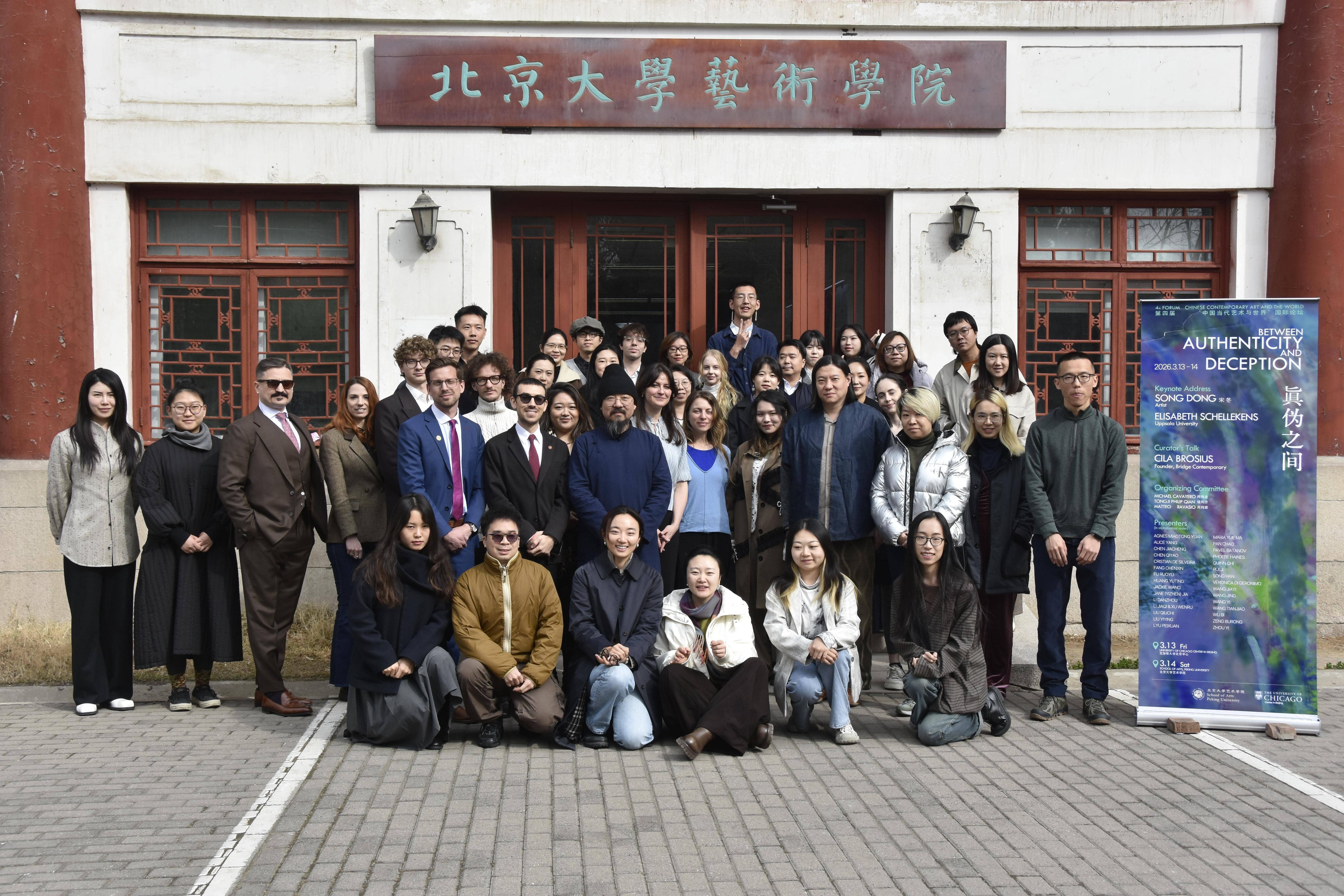
The 4th International Forum on “Chinese Contemporary Art and the World” (CCAW) was successfully held on March 13-14, 2026. Co-hosted for the first time by the School of Arts at Peking University and the University of Chicago Center in Beijing, this year’s forum focused on the central theme “Between Authenticity and Deception,” bringing together discussions on both the theoretical and practical dimensions of authenticity, deception, forgery, falseness, and related issues in contemporary art and its connected fields. The forum’s broader conceptual framework foregrounded four sub-themes: Varieties of authenticity, Fakes and forgeries, AI Deceptions, and Posers and Impostors. This edition also received a record number of applicants since the forum was founded: more than 200 submissions were received by scholars from around the world, and 30 speakers were invited to present after a competitive selection process.
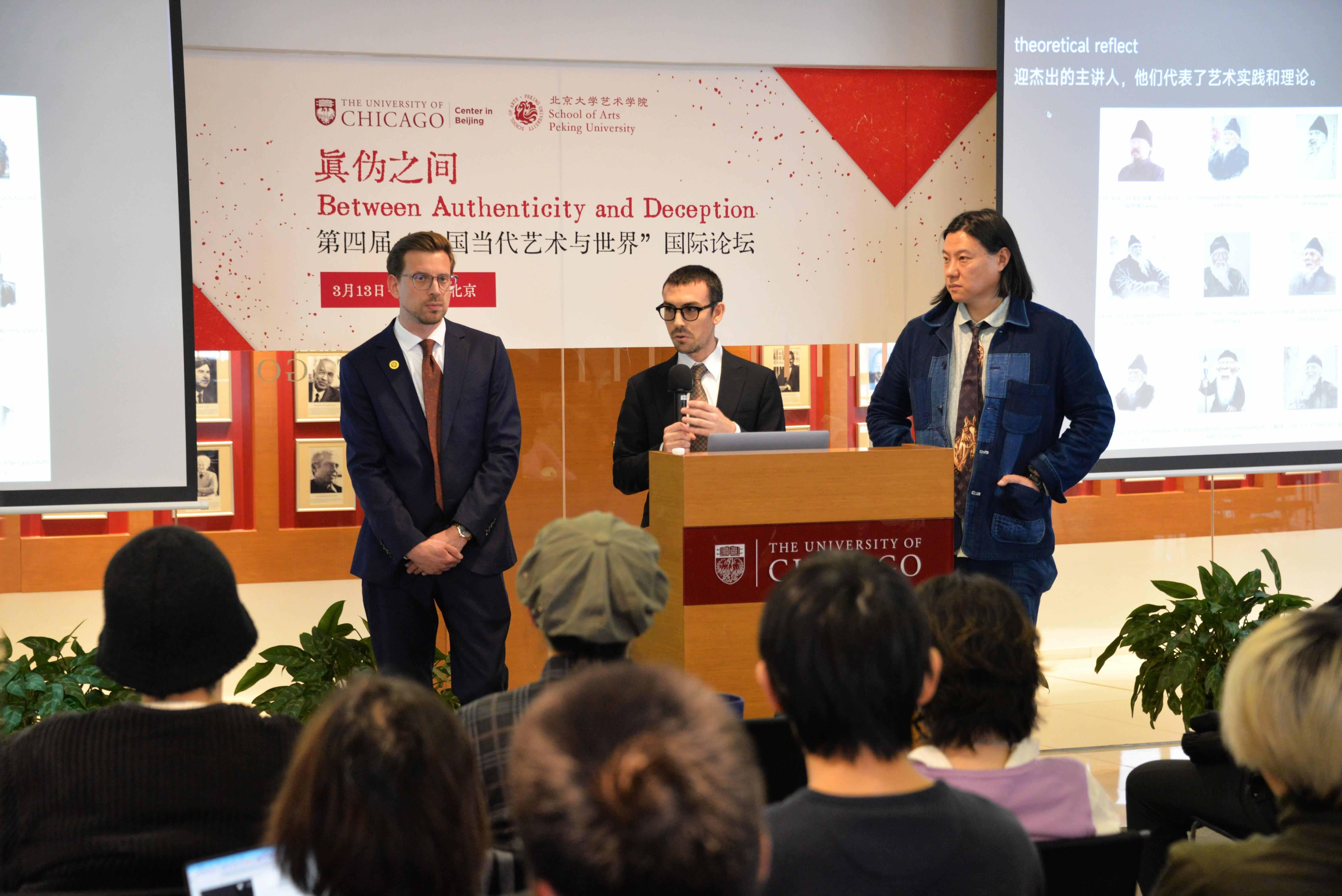
(From Left: Professors Matteo Ravasio and Michael Cavayero from the School of Arts, Peking University, and Clinical Professor Tongji (Philip) Qian from the University of Chicago give the opening remarks at the forum)
The forum opened on the afternoon of Friday, March 13, at The University of Chicago Center in Beijing. Conference co-organizers Professors Michael Cavayero and Matteo Ravasio, both from Peking University's School of Arts, and Clinical Professor Tongji (Philip) Qian from the University of Chicago, introduced the forum's inception and new avenues of collaboration between the two schools.
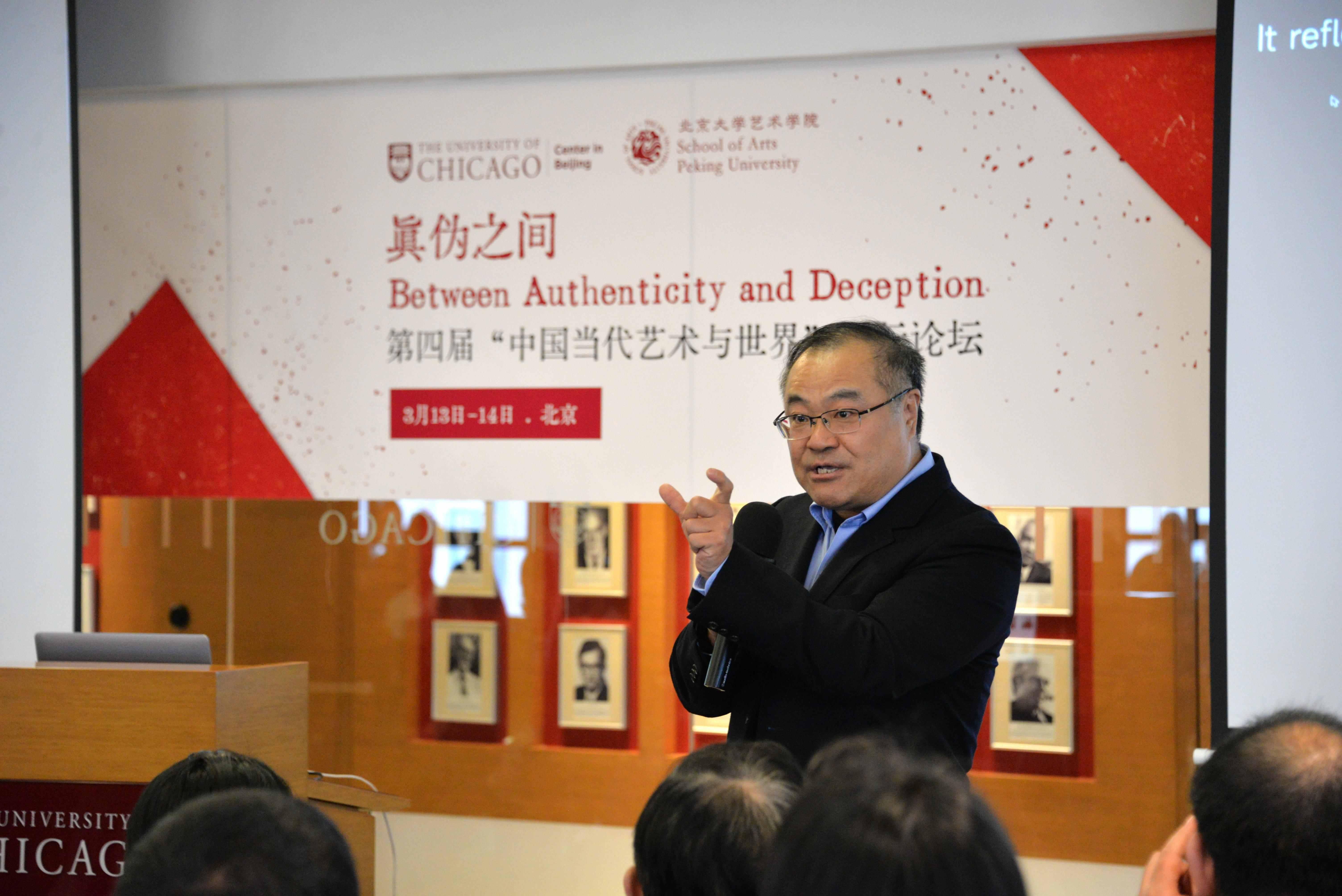
(Zening Ge, Executive Director of the Center, delivers the welcome address)
Renowned contemporary artist Song Dong then gave the first keynote address, “The Counterfeit of the Original,” reflecting on the complex relationship between authentic identity, artistic persona, and his personal artistic practice.
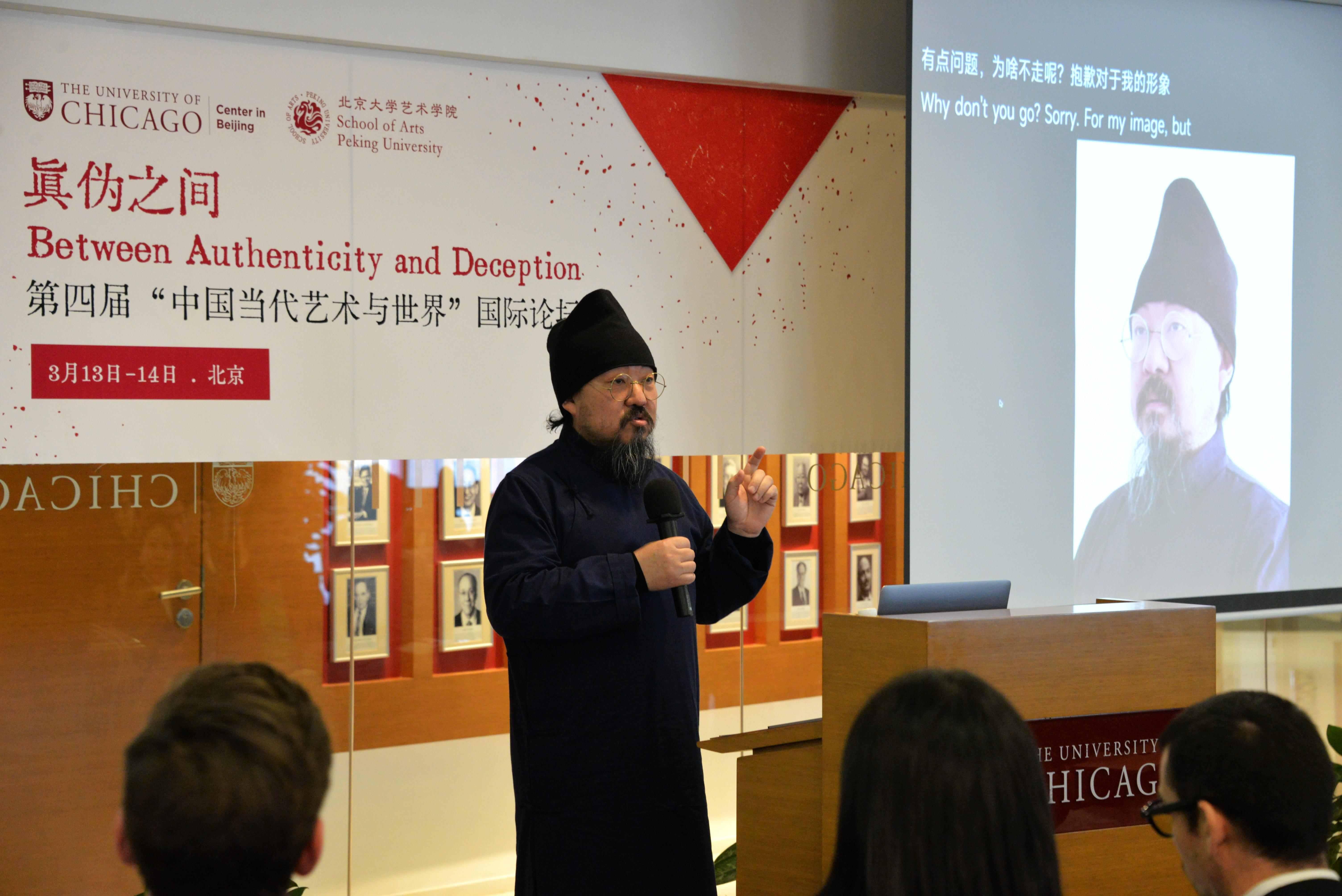
(Artist Song Dong delivers first keynote address)
This was followed by curator and founder of Bridge Contemporary, Cila Brosius’s presentation, “Transcultural (Mis)readings: Simulation and Interpretation of Nordic Artworks by a Chinese Oil Painting Village.”
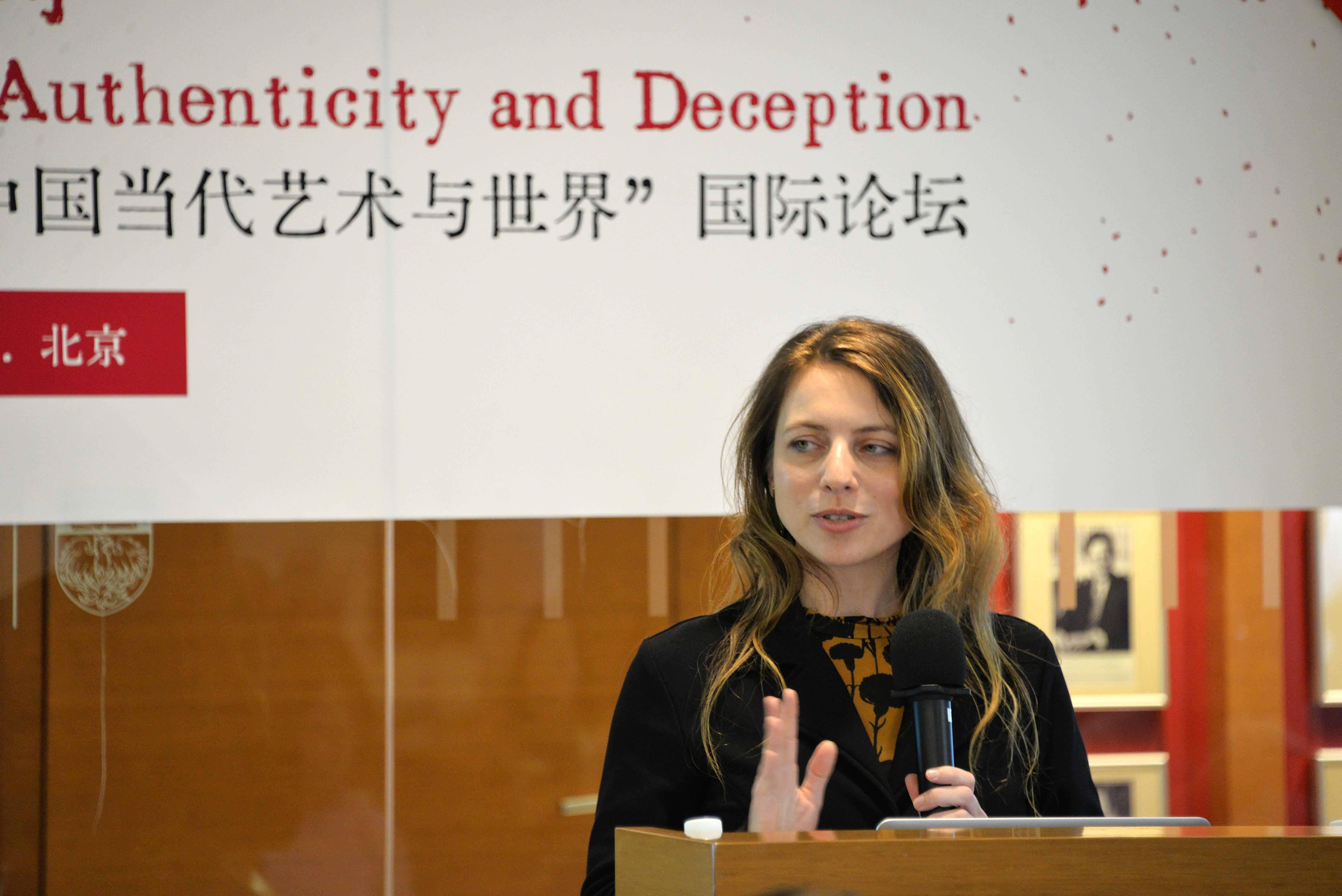
(Curator Cila Brosius gives her presentation)
Following this, Tongji (Philip) Qian of the University of Chicago introduced the exhibition And Then Some, accompanied by the opening reception, which created further opportunities for exchange among participants.
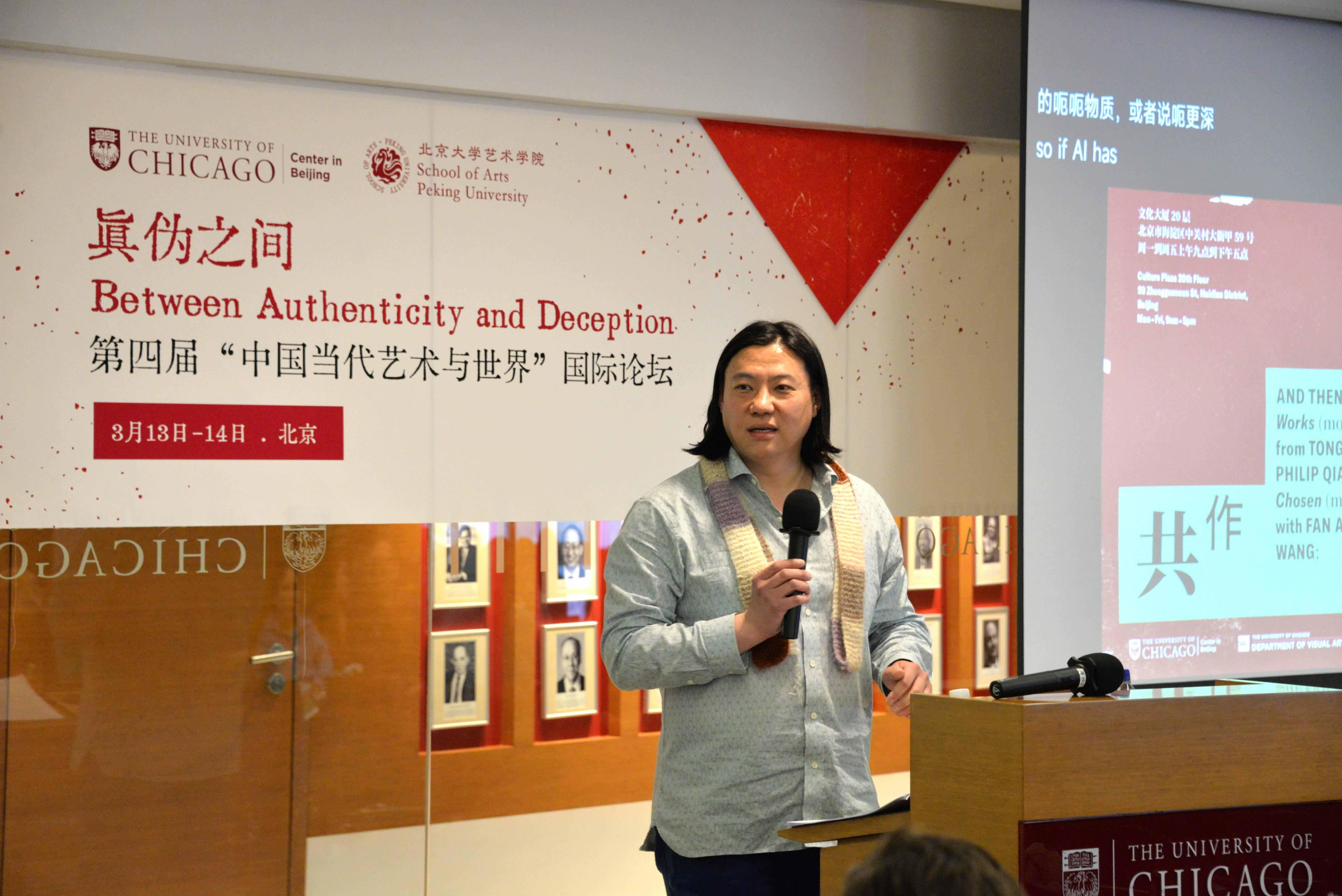
(Tongji (Philip) Qian of the University of Chicago introduces the exhibition And Then Some)
On the morning of Saturday, March 14, the forum continued at the School of Arts, Peking University. Professor Li Yang, Dean of the School of Arts, delivered opening remarks.
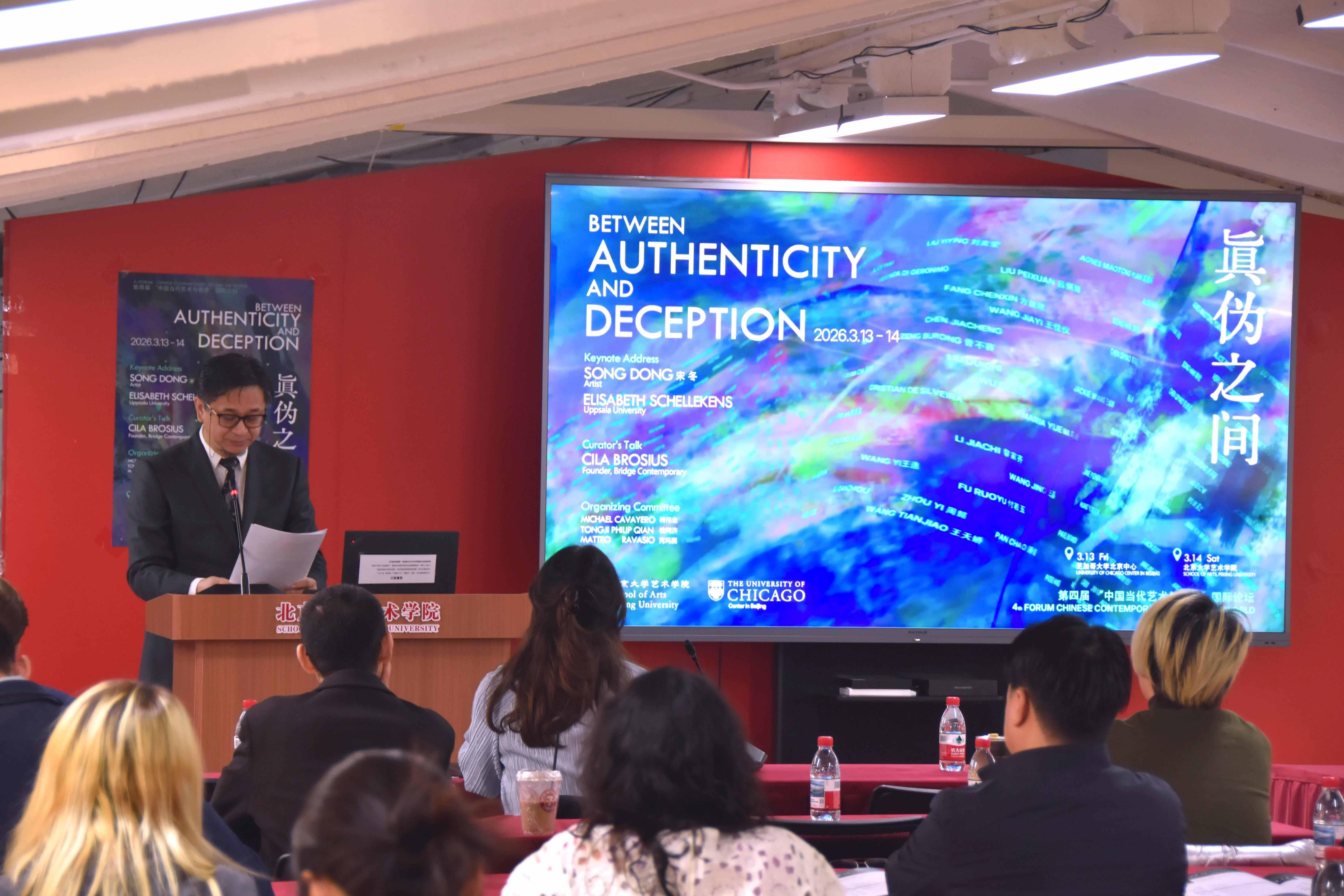
(Professor Li Yang, Dean of the School of Arts, delivers the opening remarks)
Professor Elisabeth Schellekens of Uppsala University then presented the second keynote address, “Artistic Authenticity and Aesthetic Obligation: The Case of Cultural Heritage.”
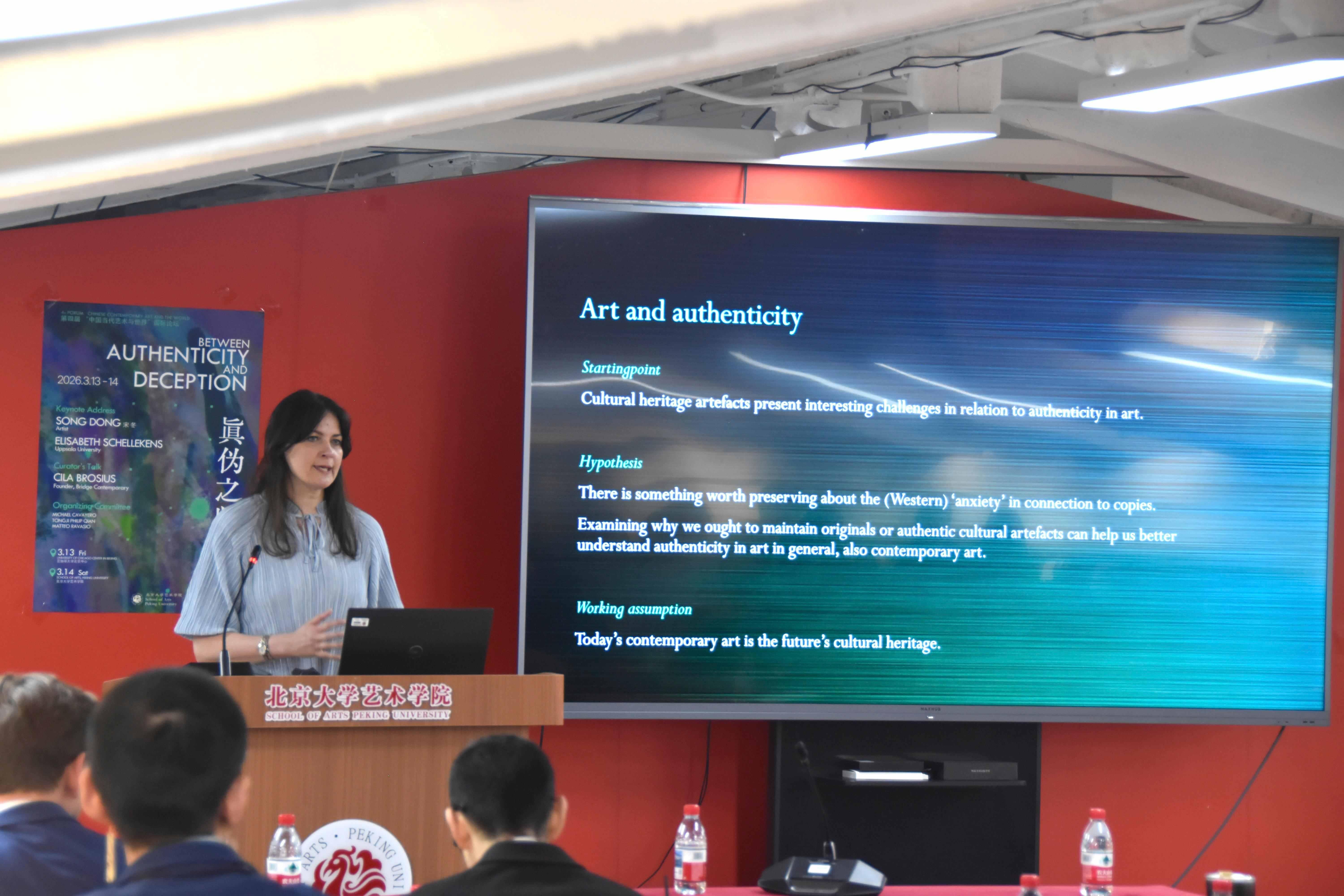
(Professor Elisabeth Schellekens of Uppsala University presents the second keynote address.)
The morning session also featured plenary presentations by Wang Jiayi of Fudan University, Liu Qiuchi of Sorbonne University, and artist Chen Jiacheng, whose topics approached the theme of Authenticity and Deception from the perspectives of perception, image, and referentiality, as well as localized artistic practice.

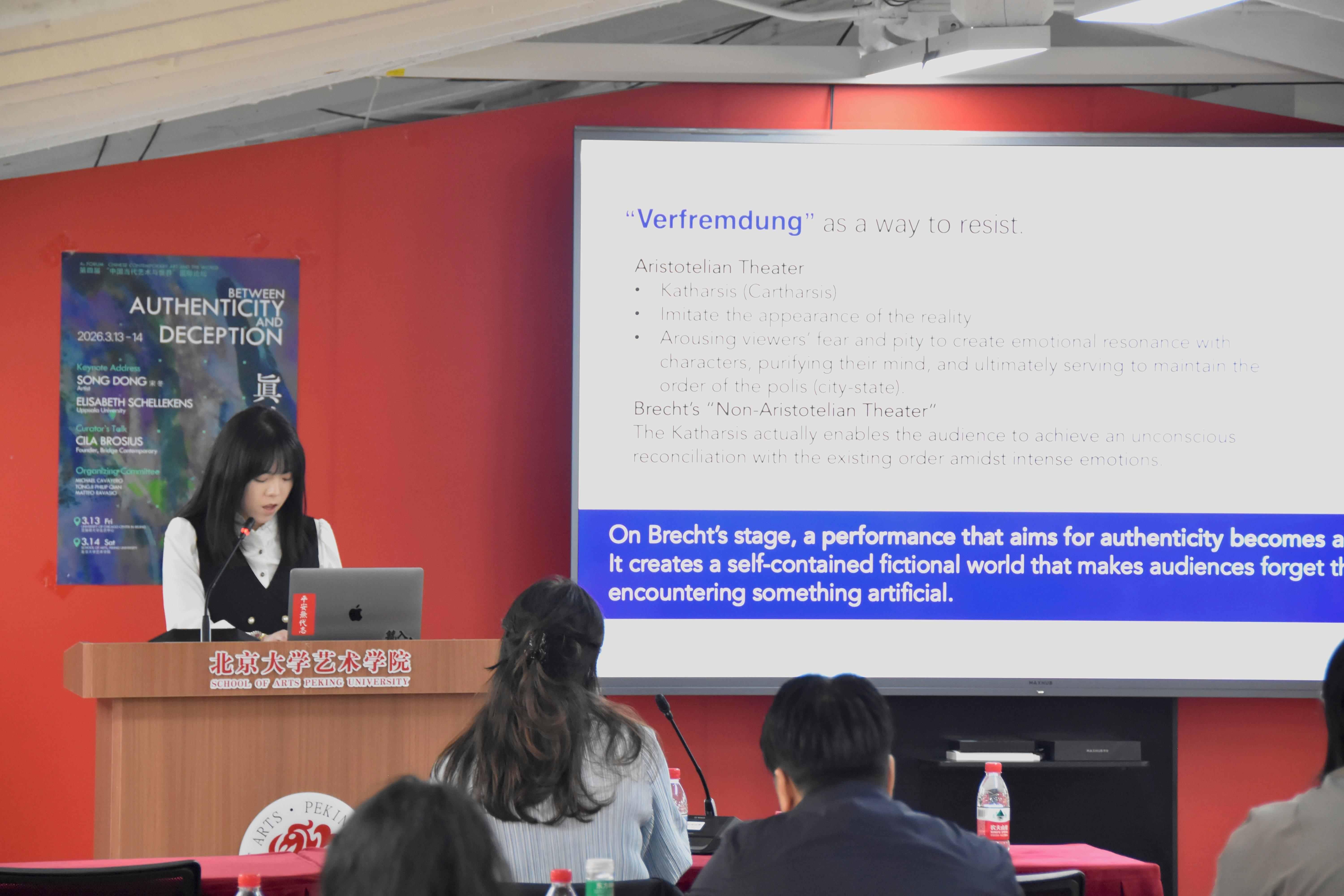
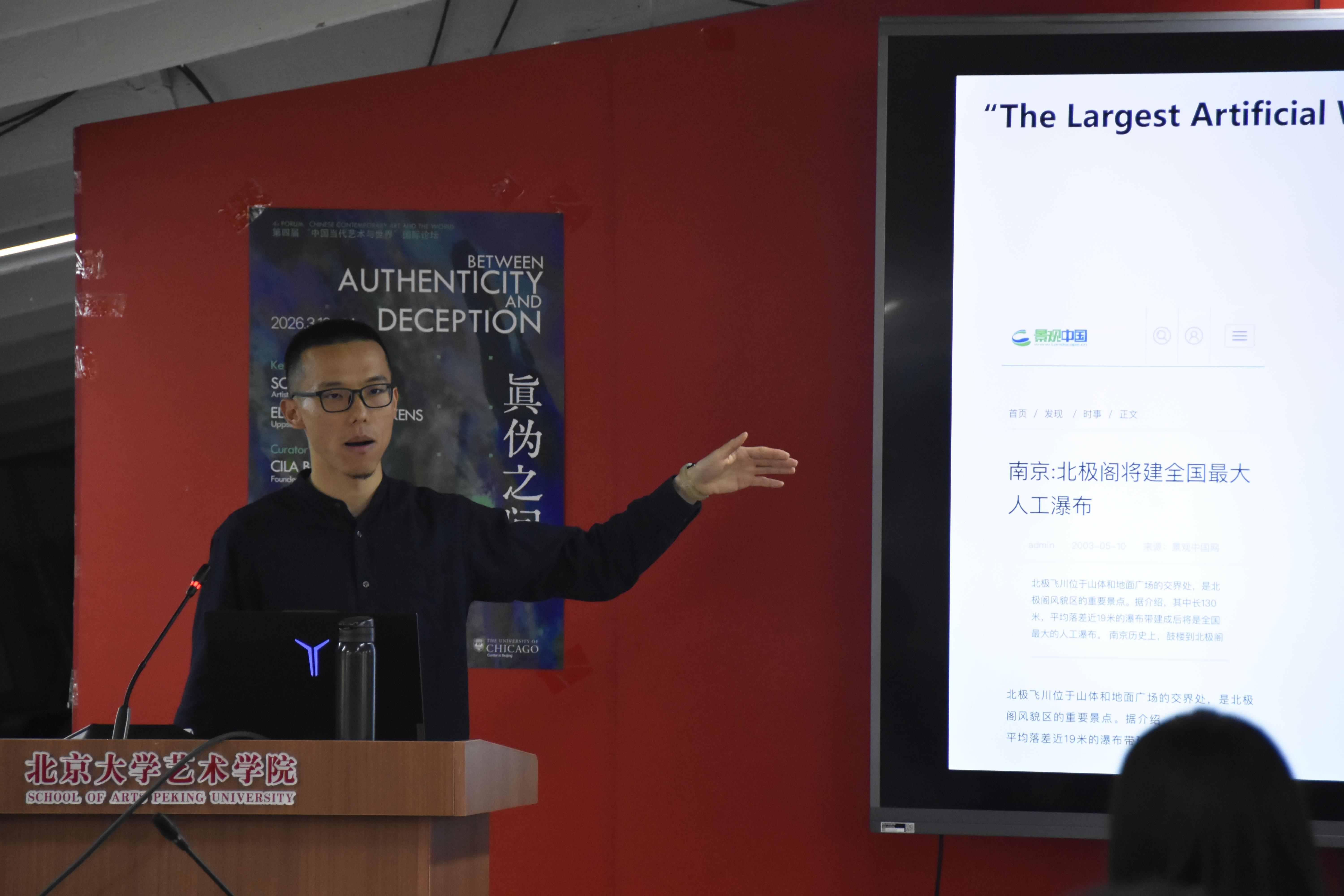
(The morning session plenary presentations by Wang Jiayi of Fudan University, Liu Qiuchi of Sorbonne University, and artist Chen Jiacheng)
The afternoon program was organized into three parallel panels: A.“Copies and Forgeries,” B. “Artistic Personas and the Authenticity of Style,” and C. “Modes of Authenticity.”
Throughout these sessions, participants discussed a broad spectrum of issues, including historical and contemporary forgery, the self-fashioning of artists, artificial intelligence and deception, technological advancements, archival processes, curatorial authority, and immersive exhibition experiences.
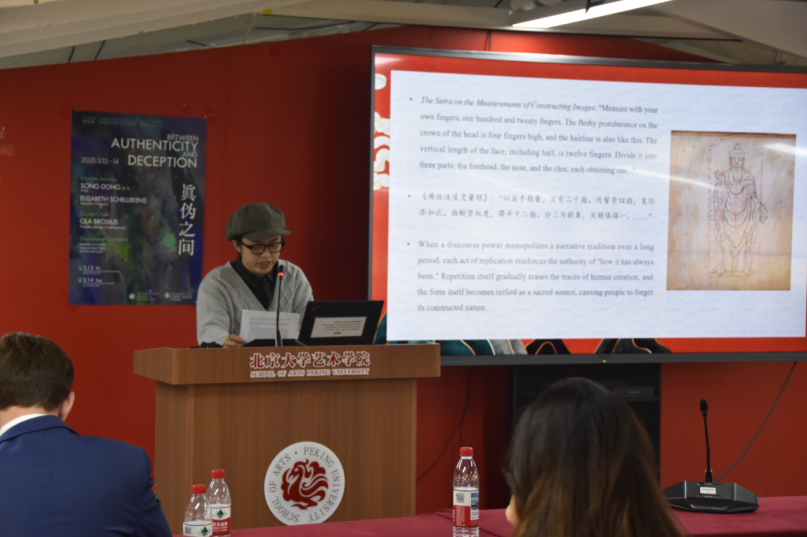


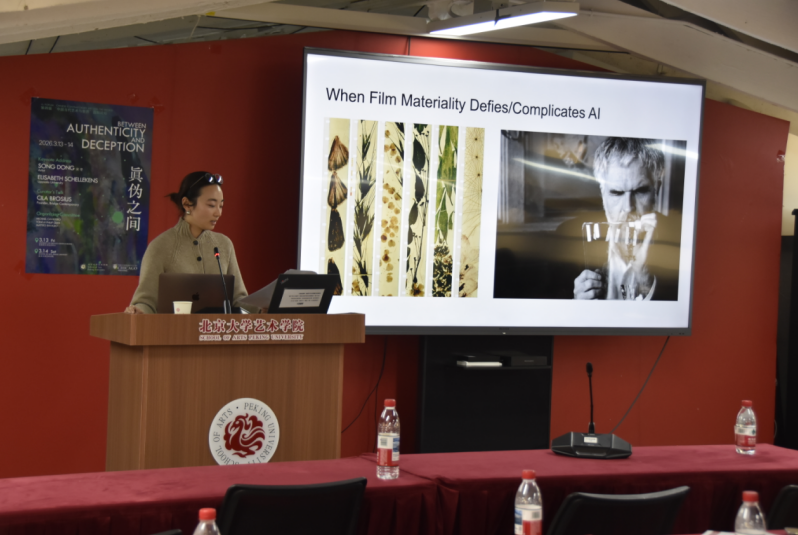


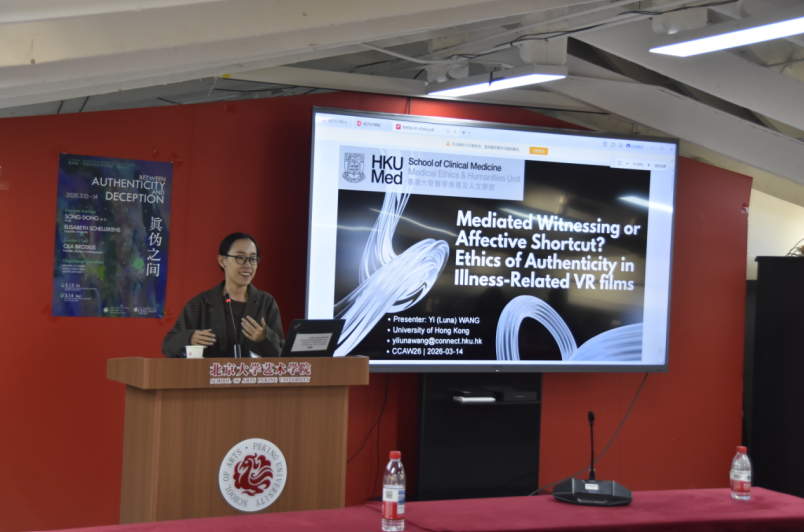

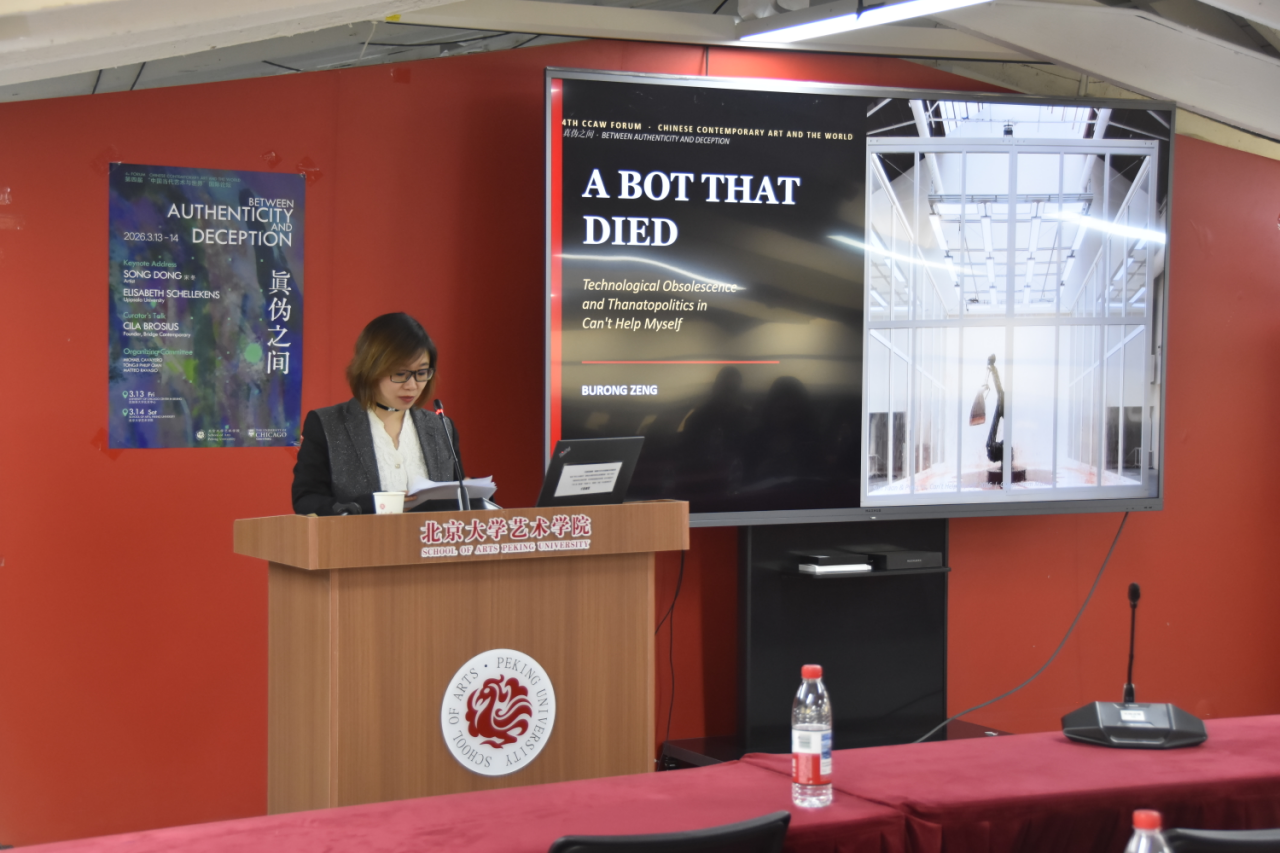
(Participants in Panel A)
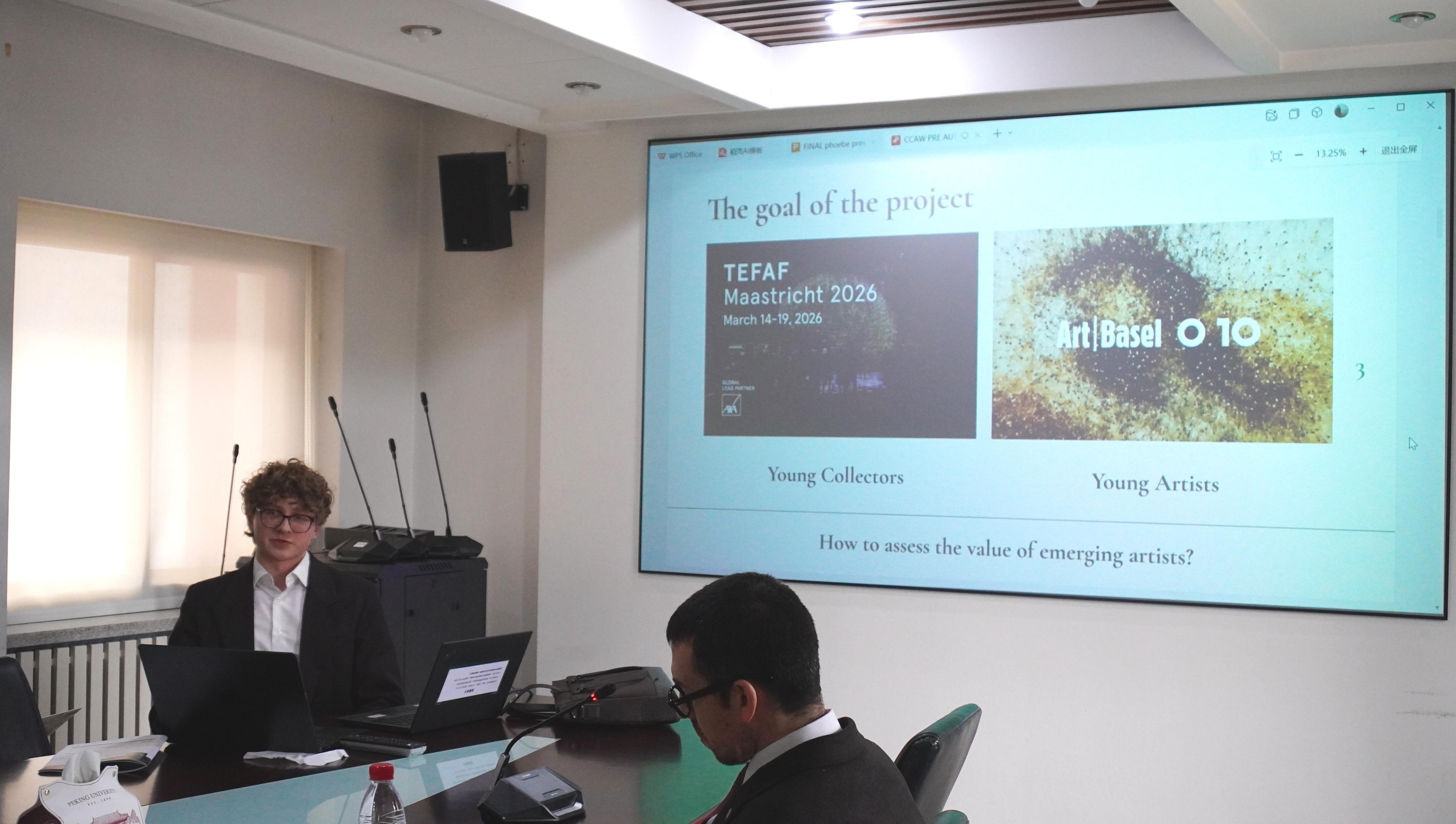
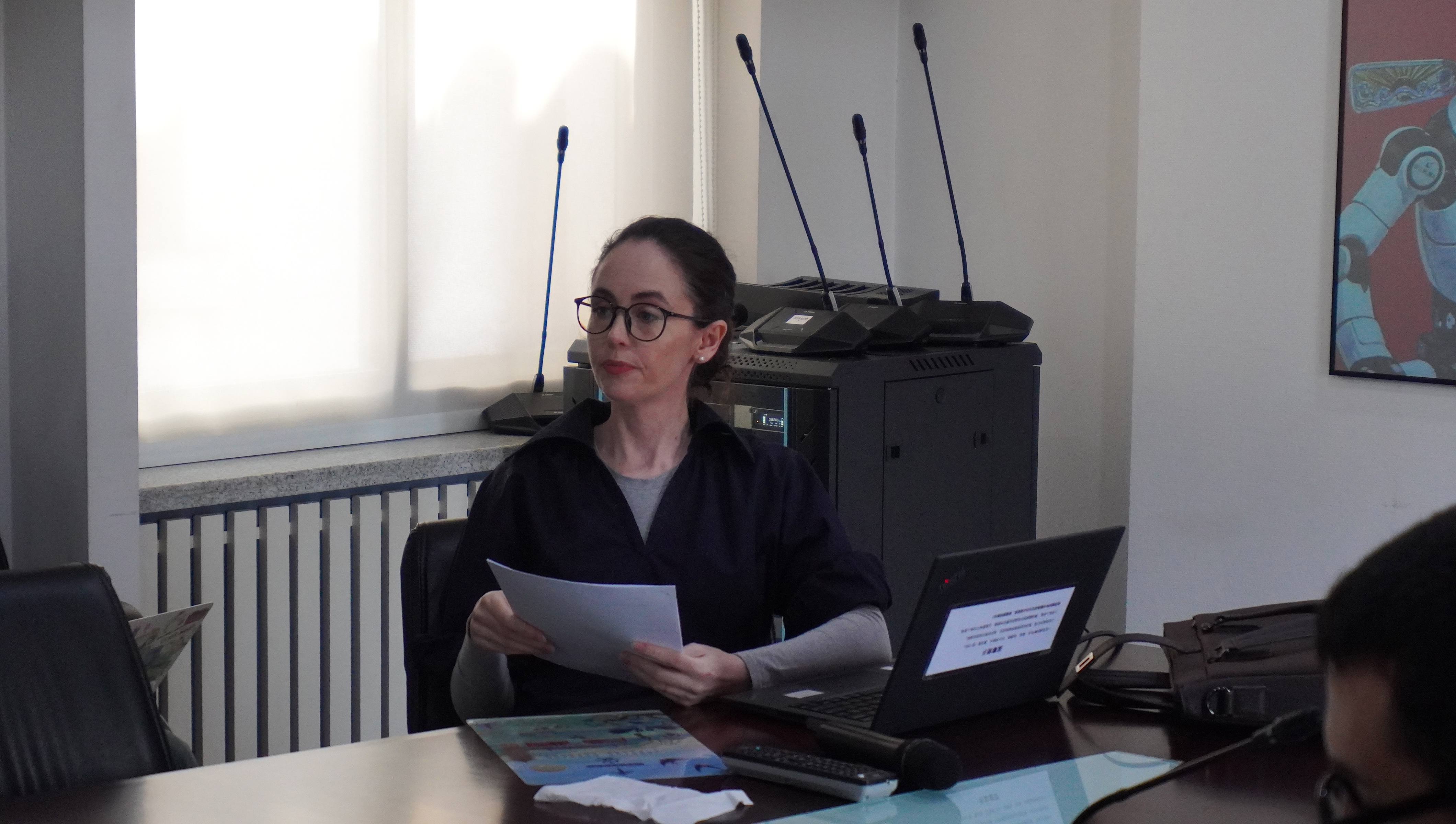

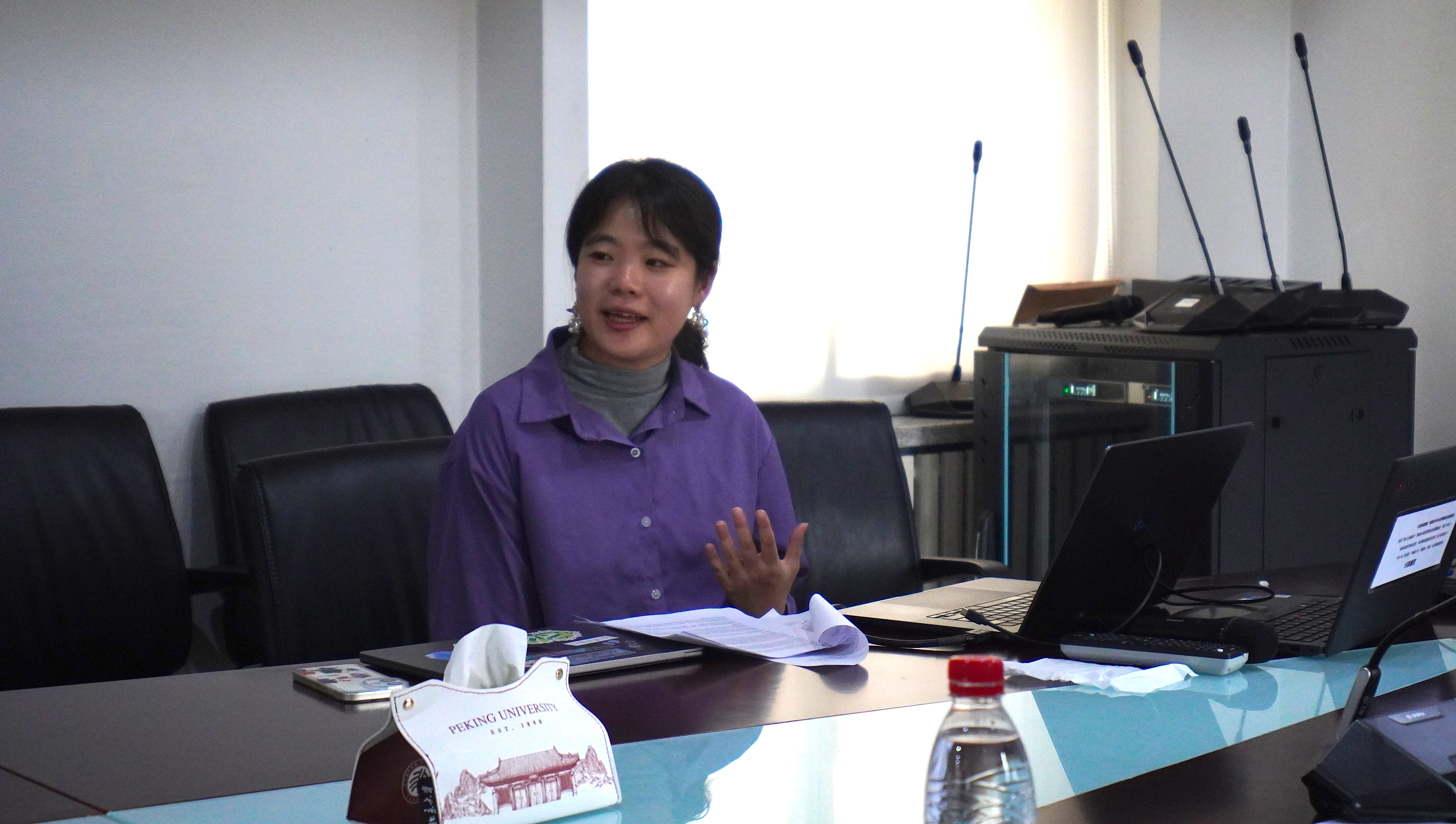
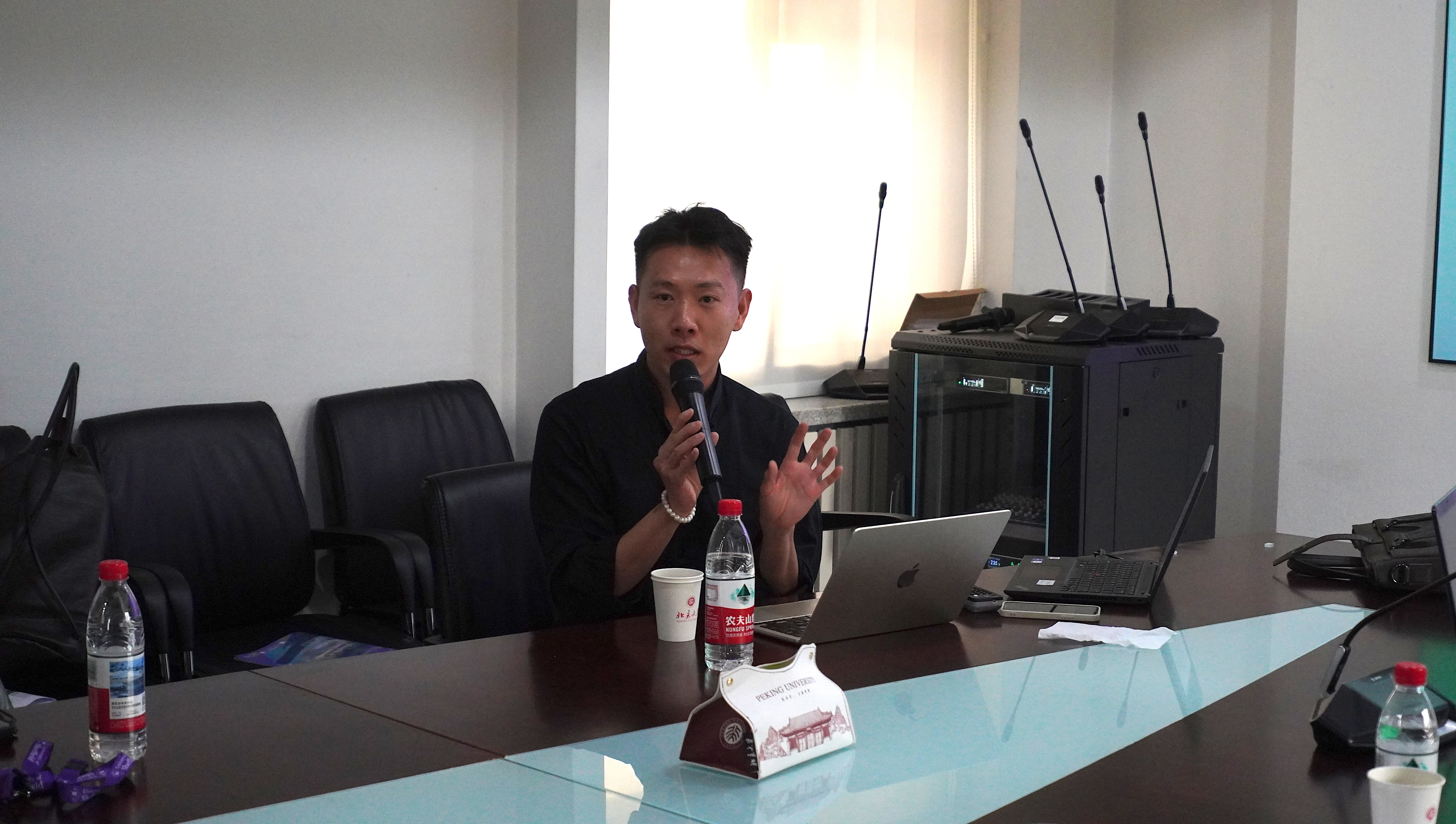
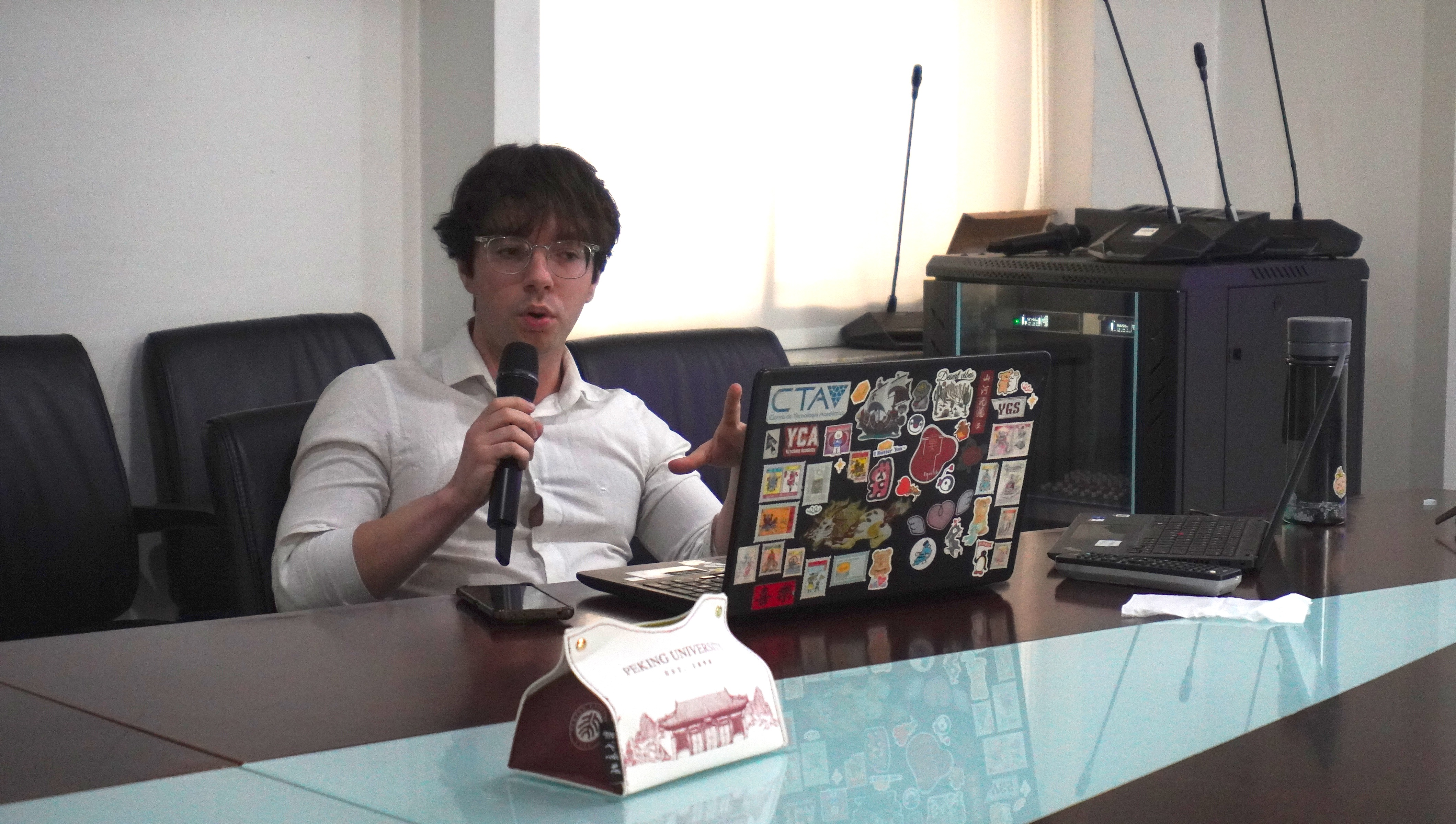
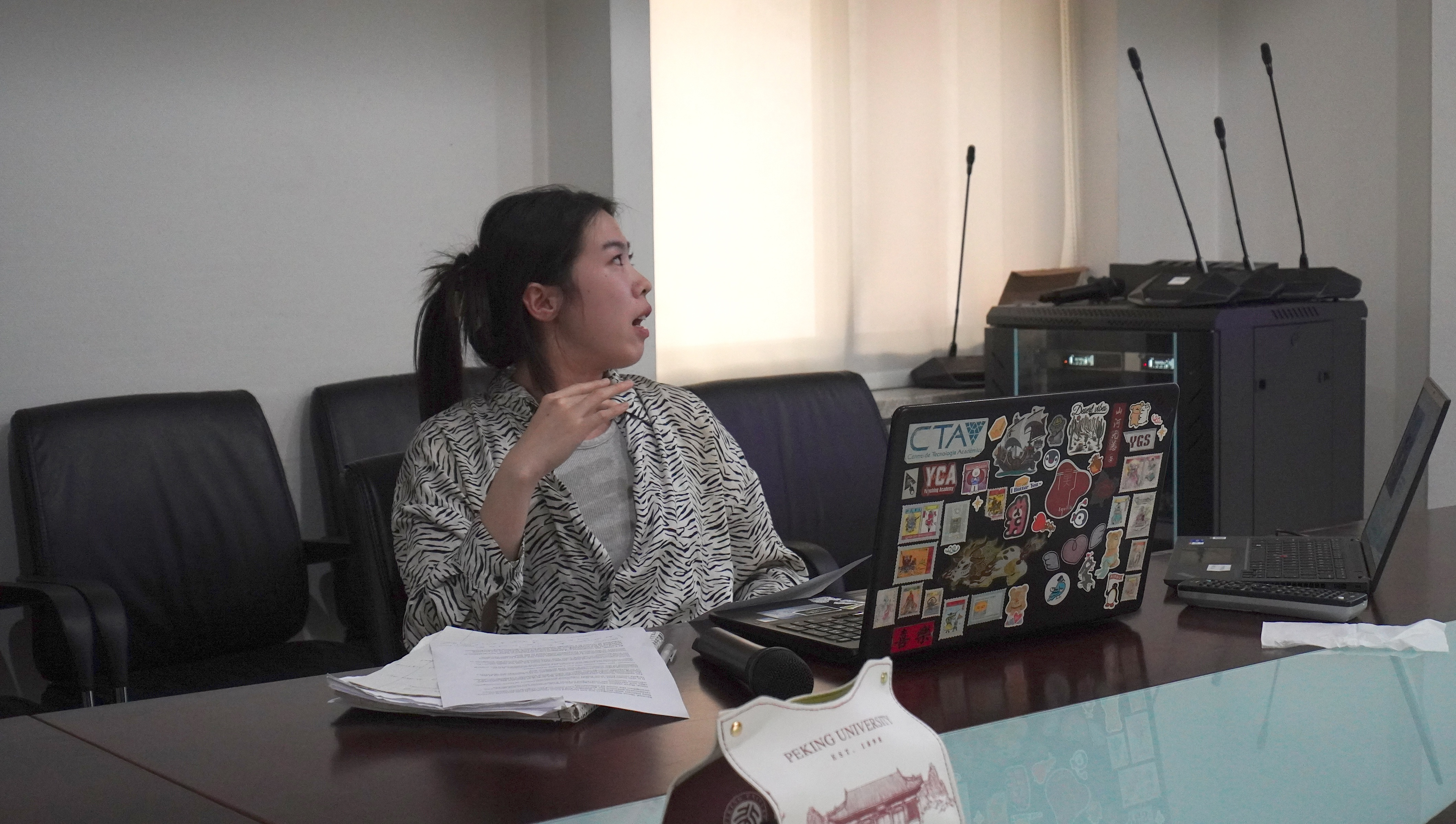
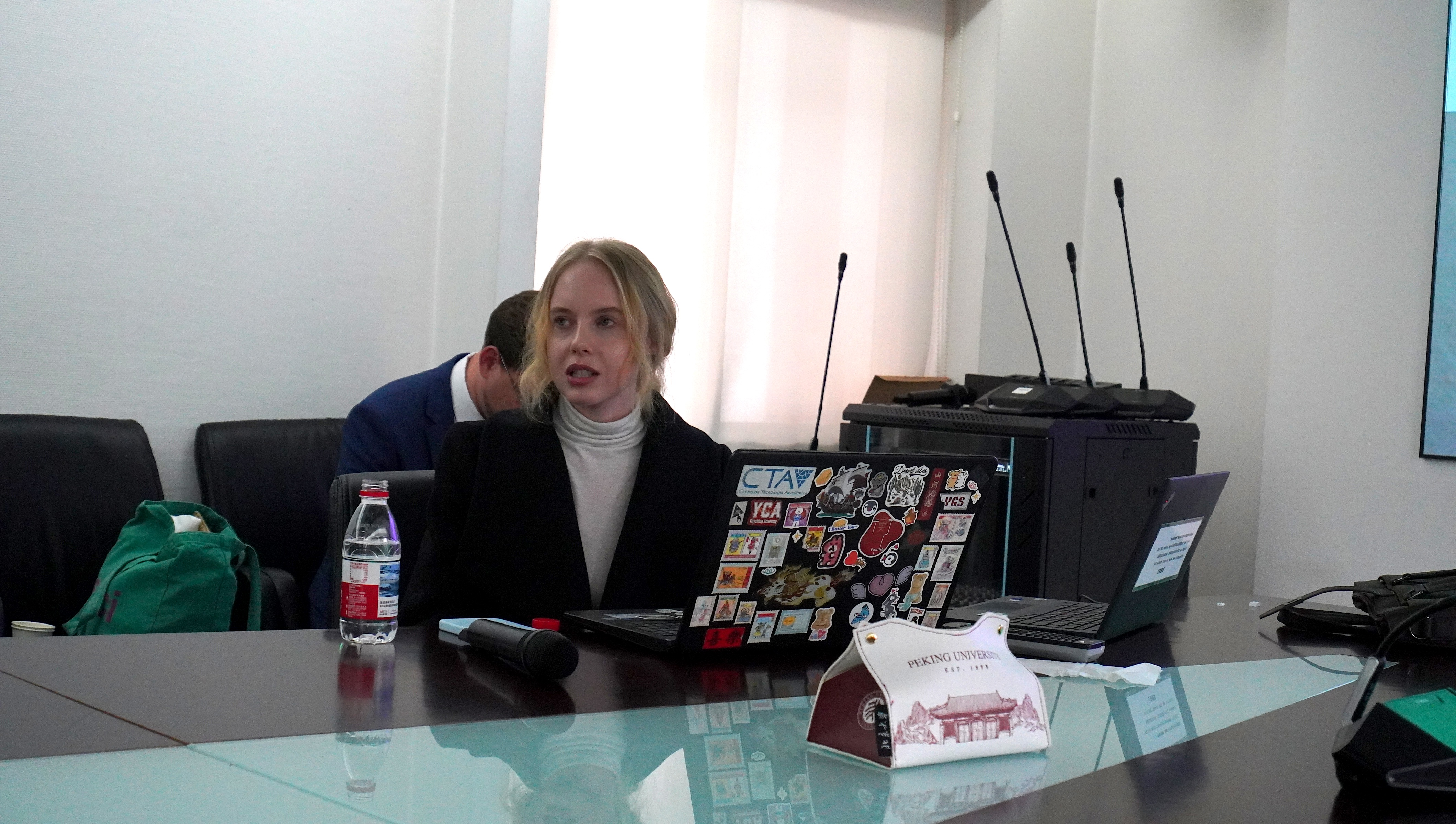
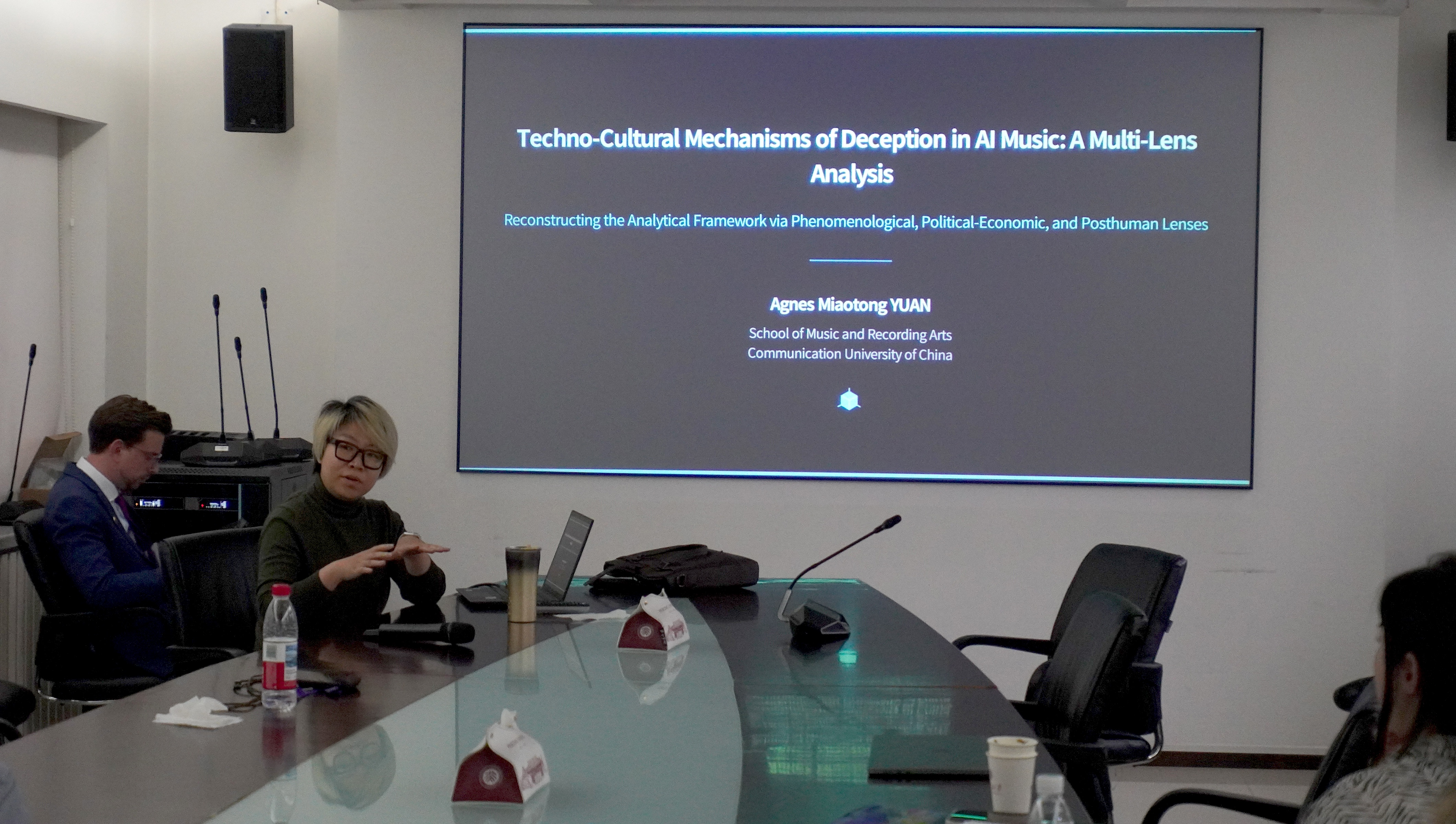
(Participants in Panel B)


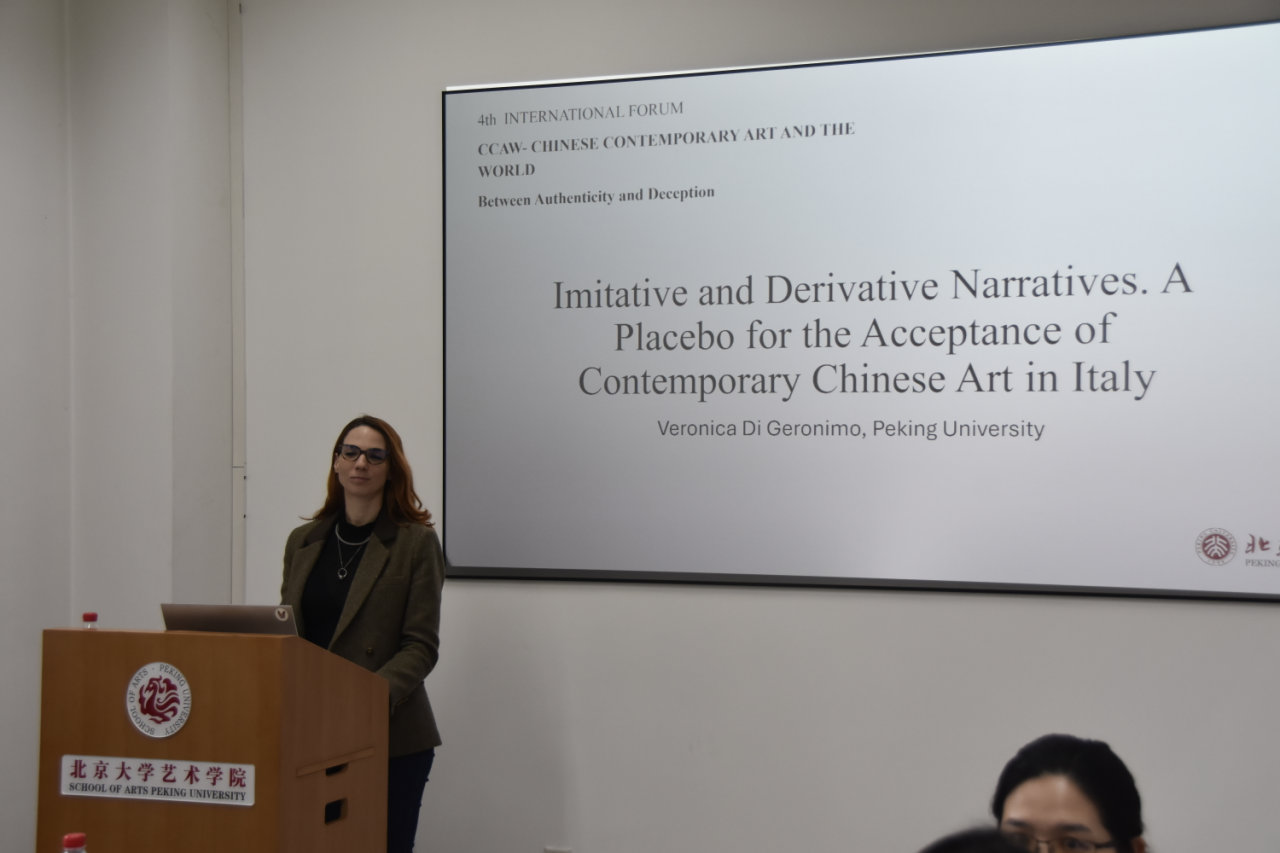

(Participants in Panel C)
The forum concluded in the evening with closing remarks by Professors Michael Cavayero and Matteo Ravasio at the School of Arts, Peking University, alongside Professor Tongji Philip Qian of the University of Chicago.
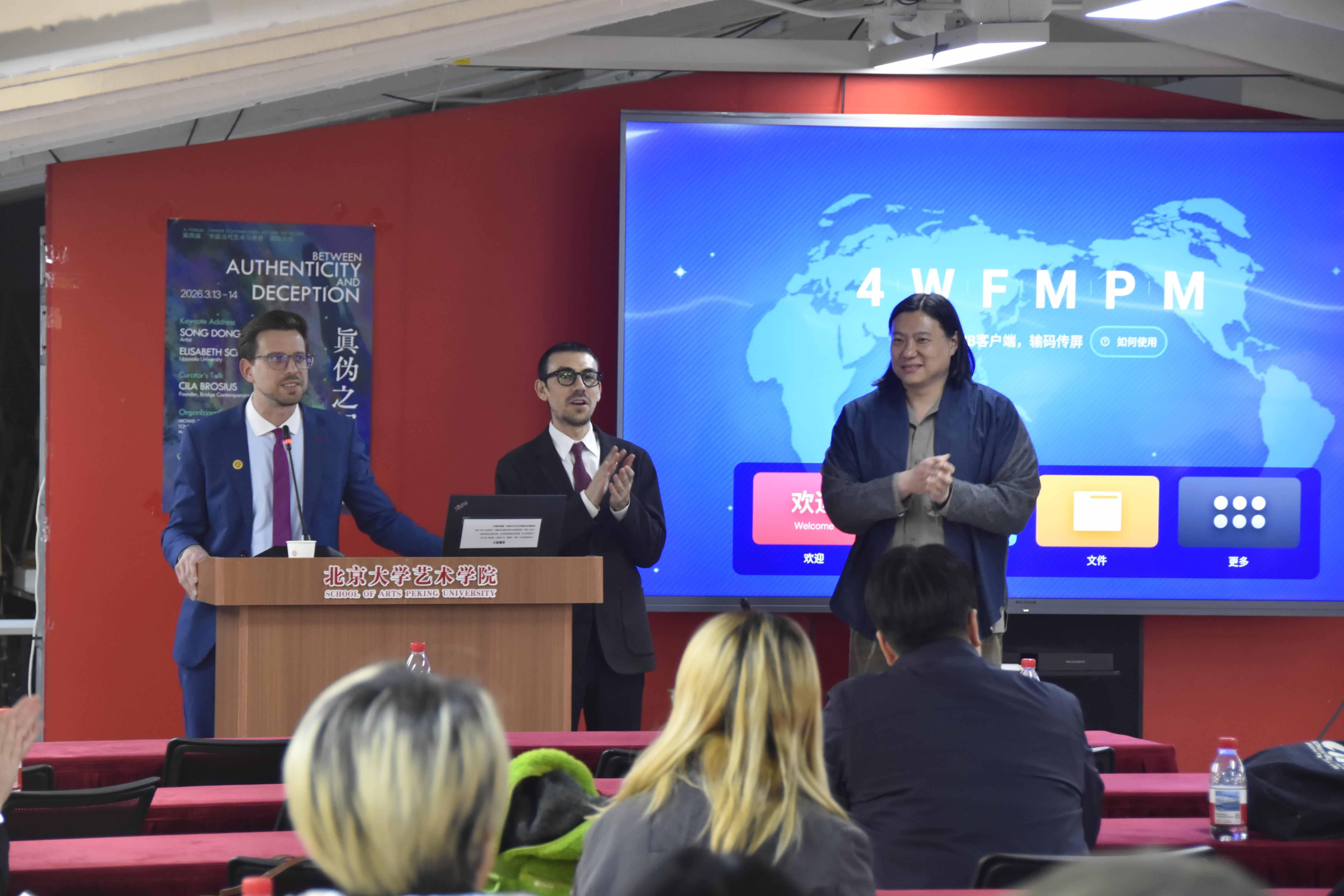
(Professors Michael Cavayero and Matteo Ravasio of the School of Arts, Peking University, together with Tongji (Philip) Qian of the University of Chicago, deliver the closing remarks)

